EP1: Longshoreman Thurman Wenzl
 Listen on Apple Podcasts
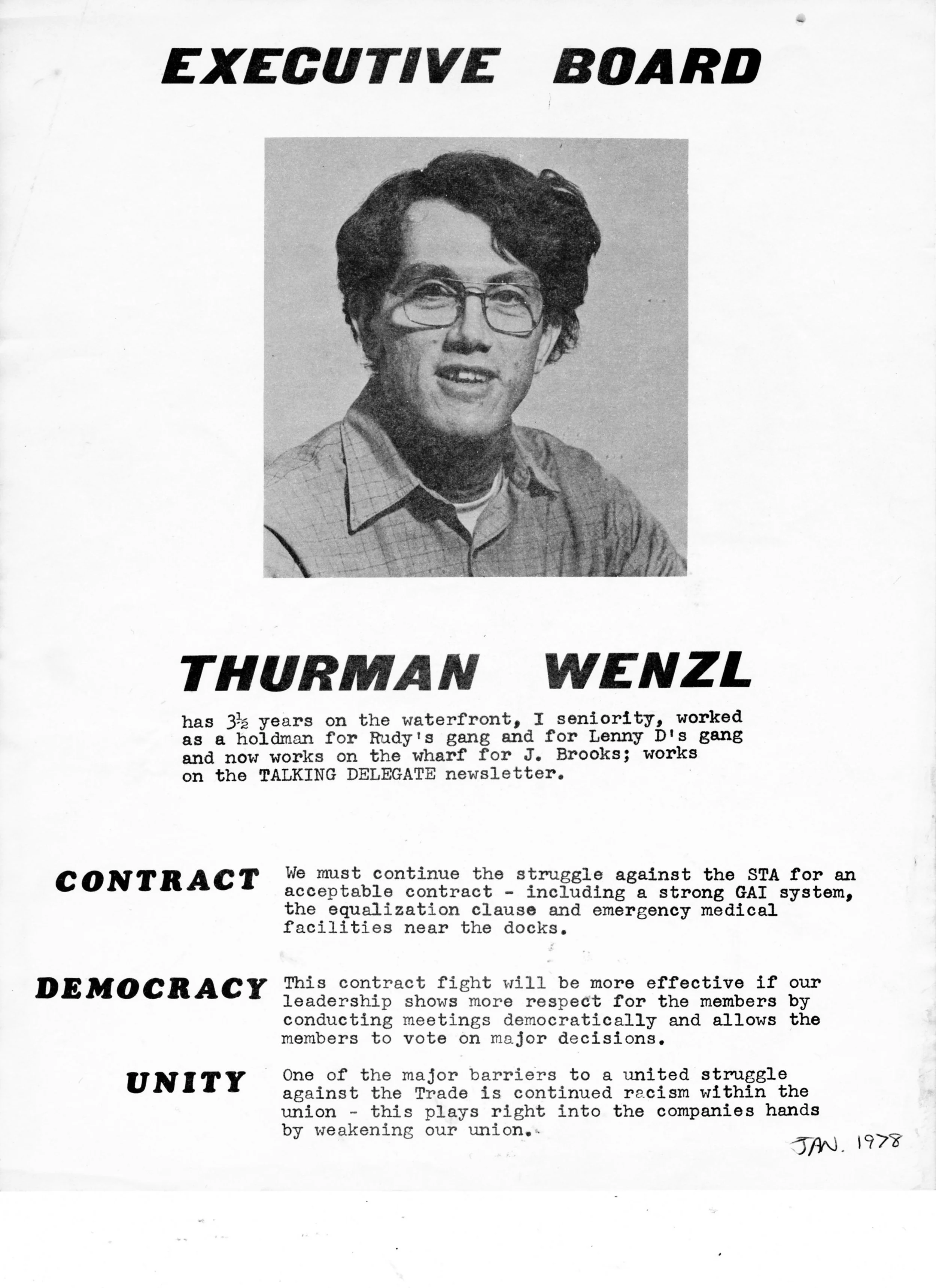
Thurman Wenzl came to Baltimore and worked on the docks from 1974 to 1982, as an active ILA member and a rank-and-file candidate for office. He studied industrial hygiene and became an occupational rep for the International Chemical Workers Union in Akron. “The years on the docks definitely helped my worker education efforts at the Chemical Workers, where I needed to relate to ordinary workers while helping them figure out which exposures might be most hazardous at work.” His memories of working in Baltimore, and of the labor movement, are exciting.
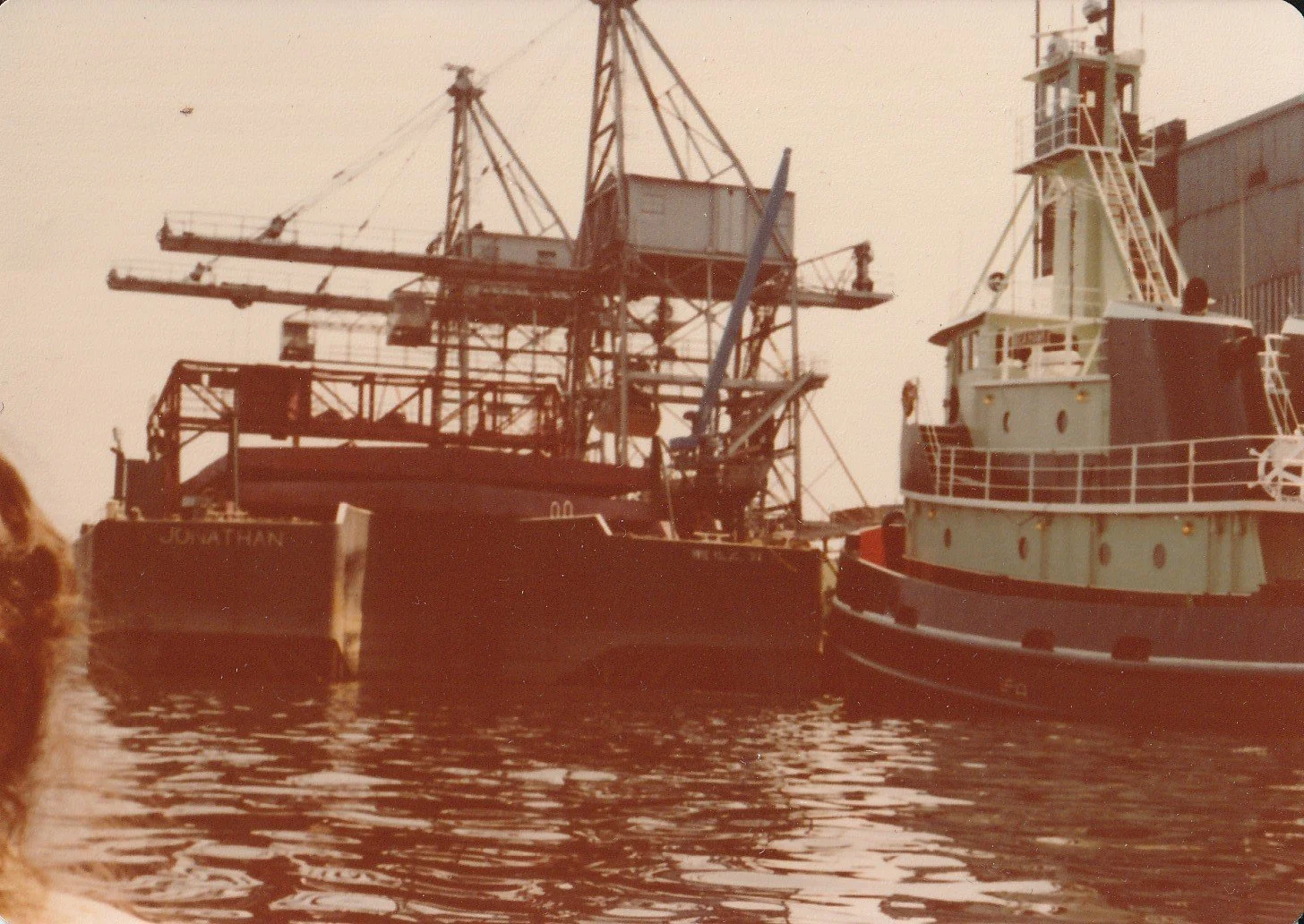
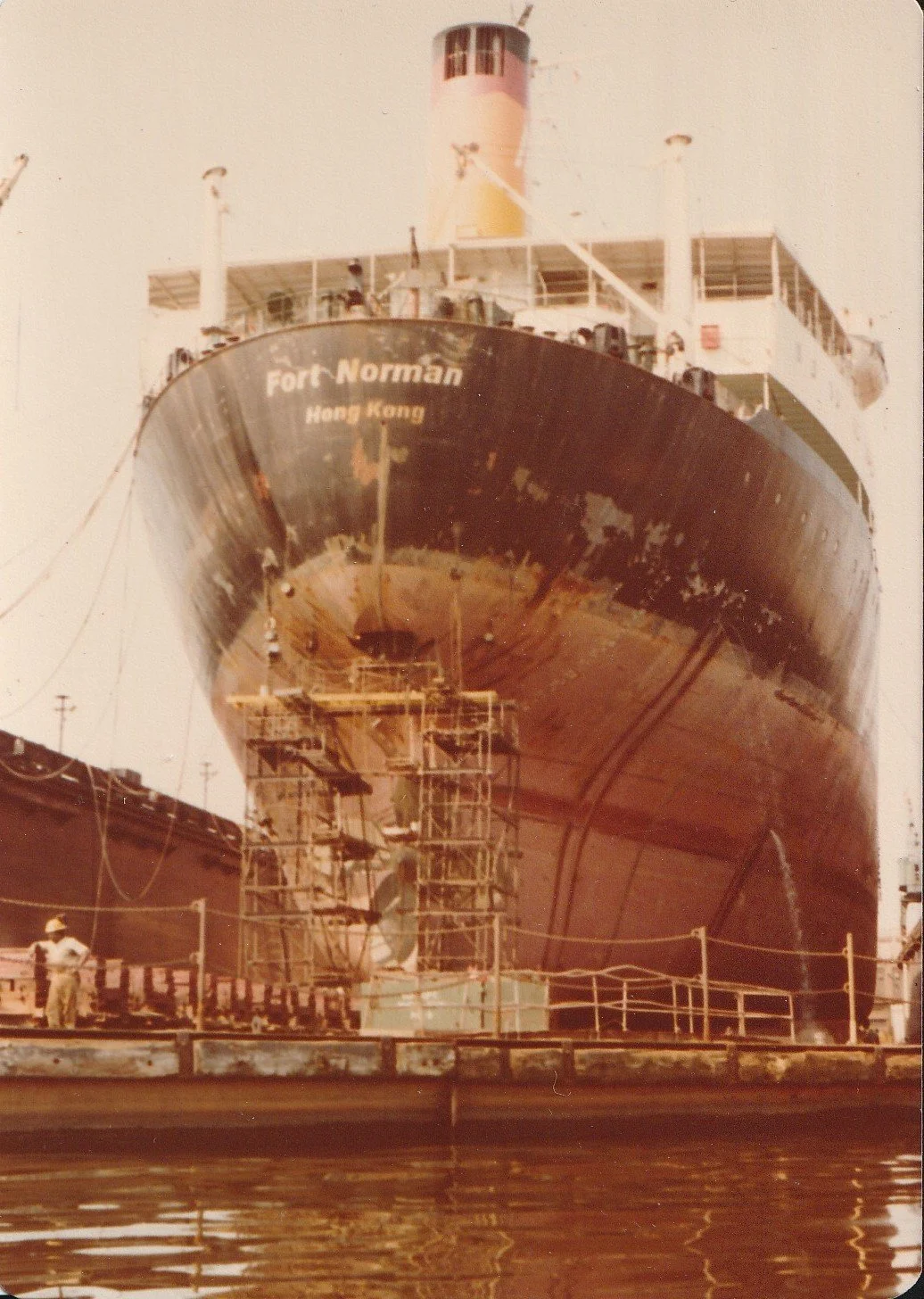
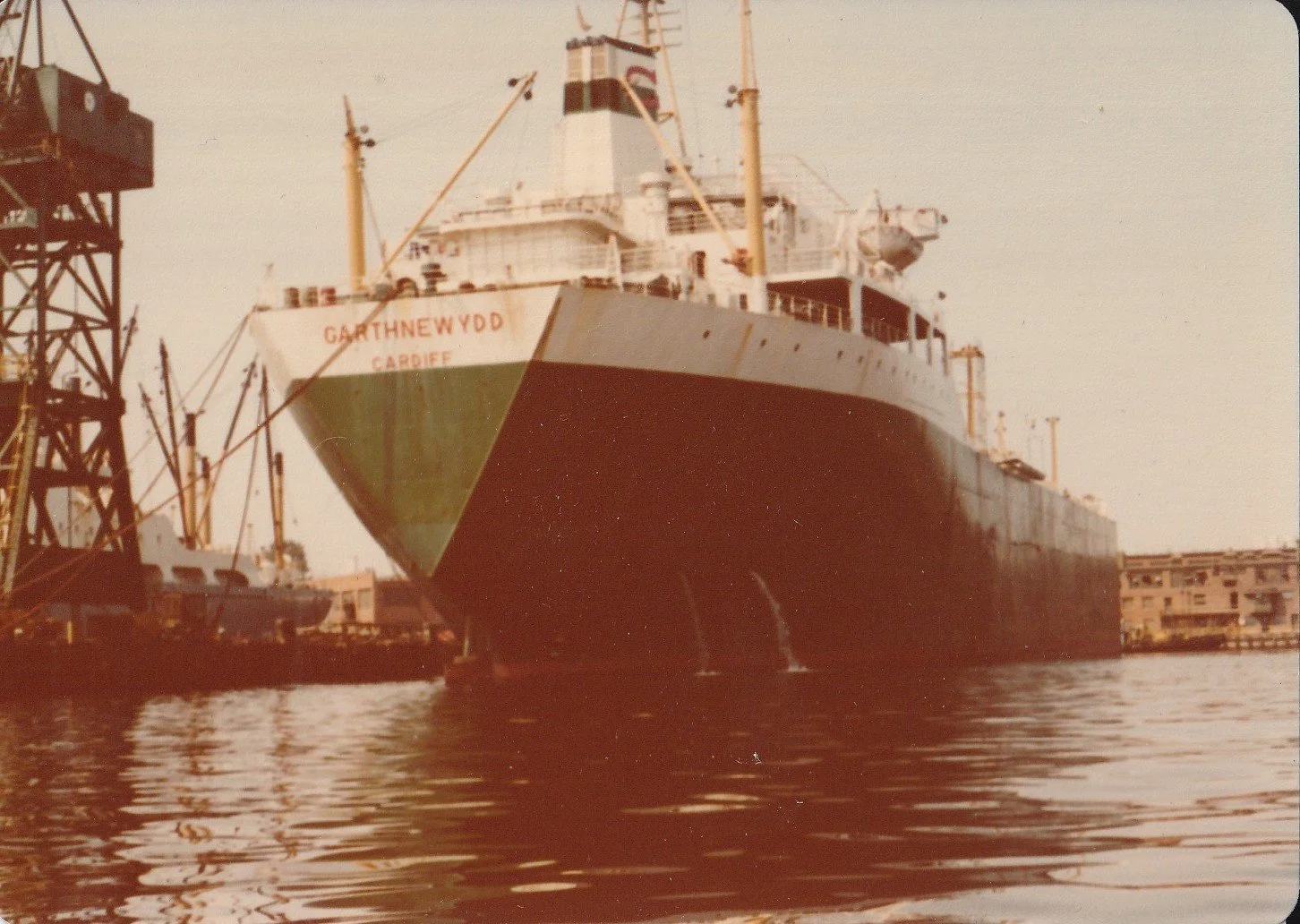
See below to view Thurman’s leaflet during his insurgent ILA campaign and historic photographs he took from a kayak in the Inner Harbor:
A Brief History of Baltimore Longshoremen:
Already in the late 1800s, longshoremen in Baltimore were getting organized.
Spero and Harris, in their 1931 book on the Black Worker, report that in 1871 longshoremen formed a union which within a month demanded improvements and gained wage increases of 20 to 25 cents per hour. Further details are not available.
Then in 1912 in Locust Point, longshoremen affiliated with the National Transport Workers Federation (NTWF) struck for improved wages and working conditions. Despite some tensions between Black and white workers, the NTWF managed to mitigate racial hostilities and many Black workers joined the union. The strike had major community support, and the Baltimore Sun reported on May 3 that a huge children’s march paraded down Fort Ave in Locust Point with signs like “My father is a union man.” A partial victory was achieved as 14 stevedoring firms and fruit importers agreed to recognize the union and grant a wage increase.
Sadly, as a result of continued racial tensions, this effort at building an industrial union did not survive, as some of the workers returned to the craft union model of the AFL.
A few years later, between 1914 and 1916, workers again began to overcome these problems with the assistance of organizers from the Marine Transport Workers Local 8 in Philadelphia, who had built an interracial organization affiliated with the Industrial Workers of the World (IWW). Ben Fletcher and other organizers traveled regularly from Philadelphia, building a multiracial coalition - at a time when the International Longshoremen’s Association (ILA) attempted to only represent white workers. Short strikes took place in 1915 but the IWW-led group never achieved a union contract, perhaps because the IWW preferred direct action.
As the Great War progressed, Philadelphia longshoremen continued to load military supplies, but were still accused and tried for ‘sedition’, as was
Socialist Party leader Eugene Debs and Fletcher were convicted and jailed. Debs, of course, continued his activism from jail and gained nearly a million votes for President of the United States in the 1920 election.
As a result of this government repression, the IWW organizing failed and the ILA took over in Baltimore with segregated locals, which remarkably lasted until 1973. At that point activist Black longshoremen sought the assistance of the Equal Employment Opportunity Commission (EEOC), which brought suit and won a merger of the two cargo-handling locals. While both white and Black gangs worked the same ships during this period, the Black gangs were often assigned the most difficult freight and the least safe hatches, and the court agreed that the separation must end. This process also led to the end of some of the favoritism that plagued the ILA and the hiring process, which earlier had depended very much on family and neighborhood connections.
References:
Batzell, Rudi. Organizing Workers in the Shadow of Slavery. Chicago: University of Chicago Press, 2025.
Cole, Peter. Ben Fletcher: The Life and Times of a Black Wobbly. Oakland, CA: PM Press, 2021.
Spero, Sterling D., and Abram L. Harris. The Black Worker: The Negro and the Labor Movement. New York: Columbia University Press, 1931.
United States Equal Employment Opportunity Commission v. International Longshoremen’s Association, 319 F. Supp. 737 (D. Md. 1970), aff’d, 460 F.2d 497 (4th Cir. 1972).